Blog

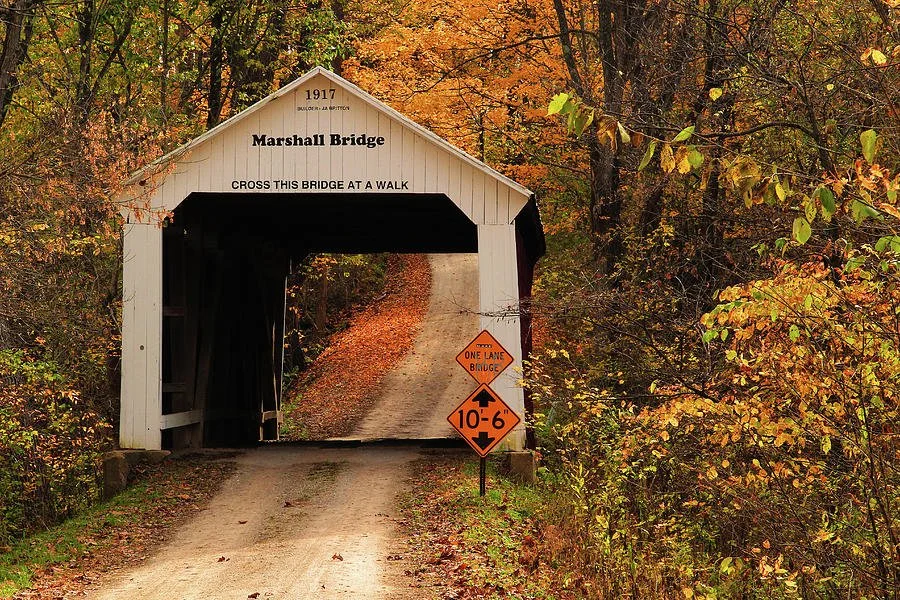
  • Marshall Covered Bridge (#29)

    Marshall Covered Bridge (#29)

    Marshall Covered Bridge

    • Built: 1917 by Joseph A. Britton (at age 80)
    • Creek: Rush Creek
    • Location: 2.5 miles SW of Tangier
    • Size: 56 ft long + 9 ft overhang; 10 ft 6 in clearance
    • Truss Type: Burr Arch, single span
    • Foundation: Concrete

    History

    • Despite its name, the bridge is unrelated to the town of Marshall. It was likely named for David W. Marshall, owner of the nearby Hill Crest Valley Farm, though some suggest Civil War veteran Mahlon Marshall.
    • The C&EI Railroad once ran near the bridge but was abandoned after bankruptcy in 1921 and dismantled in 1943.
    • This was Britton’s second-to-last covered bridge in Parke County, built when he was 80 years old.
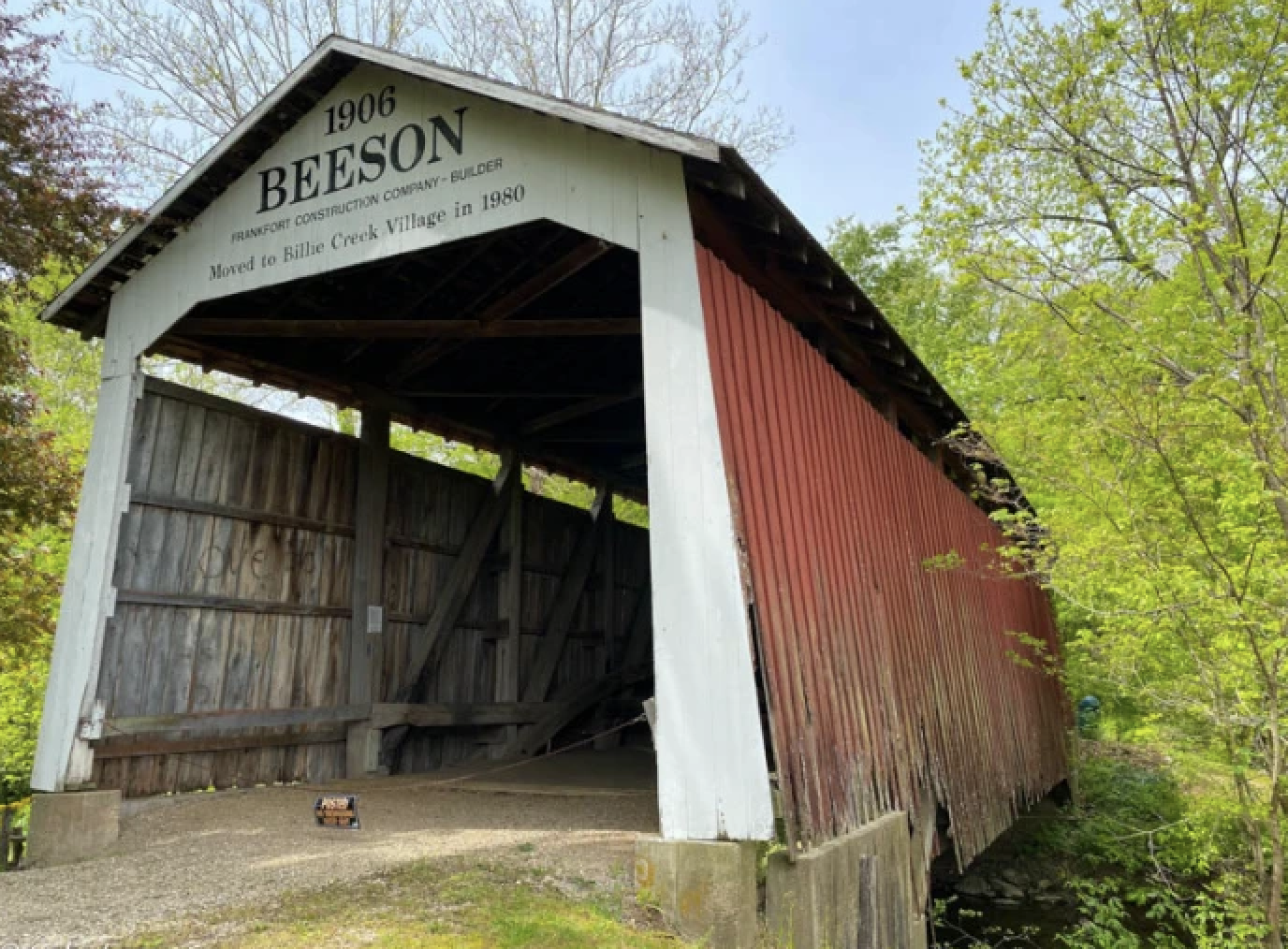
  • Beeson Covered Bridge (#38)

    Beeson Covered Bridge (#38)

    Beeson Covered Bridge

    • Built: 1906 by Frankfort Construction Co.
    • Relocated: 1979 to Billie Creek Village (moved by Buchta Trucking)
    • Creek: Originally Roaring Creek; now spans Williams Creek
    • Location: 1 mile NW of Marshall → now at Billie Creek Village on US 36
    • Size: 55 ft long; 16 ft wide; 12’6 clearance
    • Truss Type: Burr Arch, single span
    • Foundation: Concrete (reset on creosoted wood)
    • Relocation Cost: ~$20,000

    History & Challenges

    • Closed in 1974 due to unsafe abutments.
    • Survived two arson attempts in August 1979.
    • Displaced by floodwaters in 1989; repainted in 1990.
    • Named for the Beeson family, longtime landowners near the site.

    Relocation & Preservation

    • Moved in 1979 to Billie Creek Village, near the relocated 1835 Beeson log cabin.
    • Relocation funded jointly by Billie Creek Village and Parke County Incorporated.

    Community Impact

    • Closure disrupted routes to Turkey Run High School, Turkey Run State Park, and emergency services.
    • Led to the creation of the Roaring Creek Citizens Association (RCCA) to address local infrastructure needs.
  • Bridgeton Covered Bridge (#8)

    Bridgeton Covered Bridge (#8)

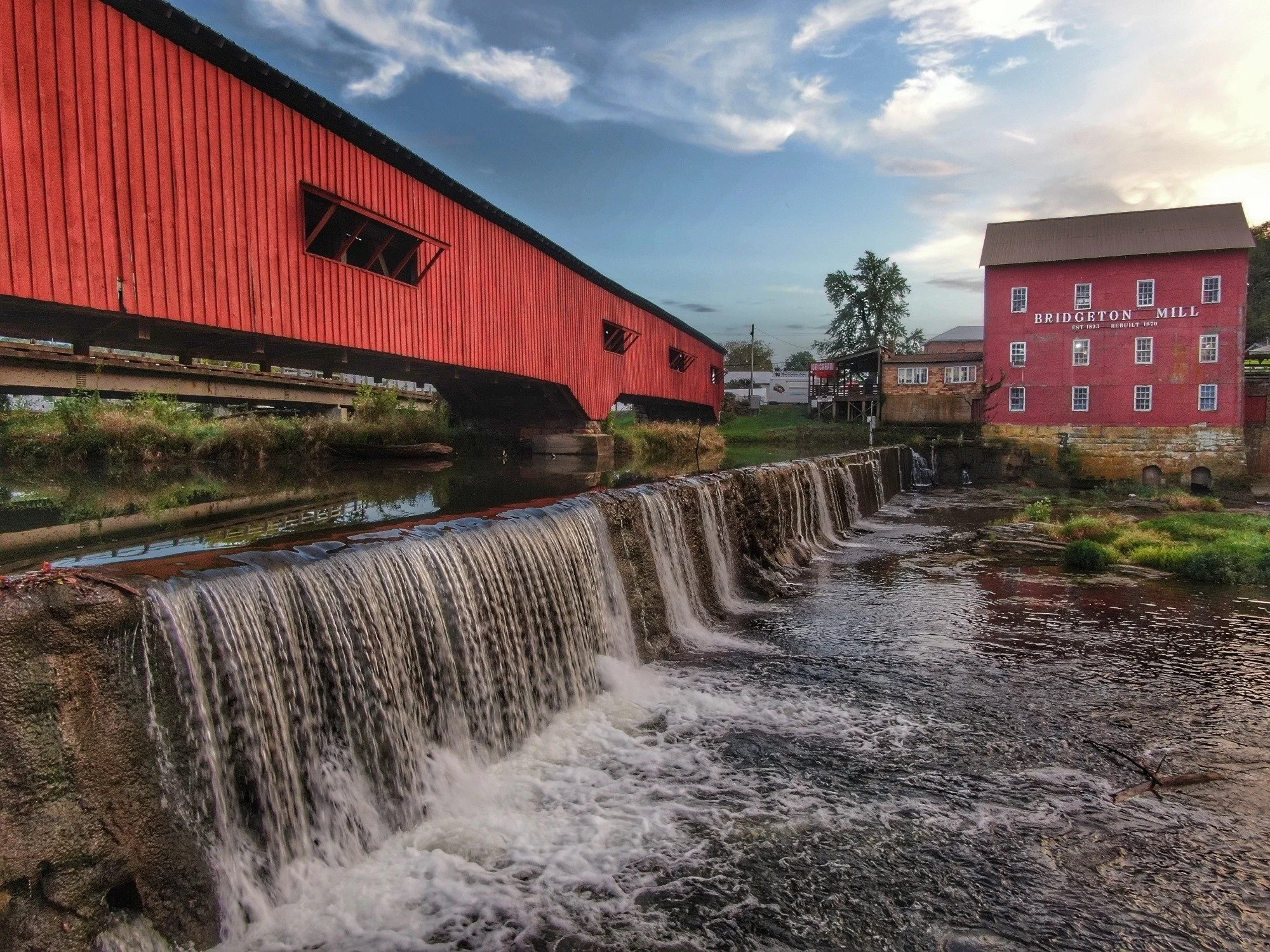
    Bridgeton Covered Bridge

    • Built: 2006 by Dan Collom & local community
    • Creek: Big Raccoon Creek
    • Location: Bridgeton, Indiana
    • Size: 245 ft long + two 11 ft overhangs; 13 ft wide; 12 ft clearance
    • Truss Type: Burr Arch, 2-span
    • Foundation: Sandstone block
    • Original Cost: $10,200

    History & Restoration

    • Early open bridges collapsed; a covered bridge was built in 1868 by J.J. Daniels.
    • Bypassed in 1967, refurbished in 1988–89, but destroyed by arson in 2005.
    • Rebuilt in 2006 through community effort.

    Mill & Town Legacy

    • The Bridgeton Mill, first built in 1823, was rebuilt in 1871 after fire and still operates today, producing over 20 types of milled goods.
    • Bridgeton, once nicknamed “Sodom” for its rough reputation, was renamed by local women after its bridge.
    • The mill dam (225 ft long, 9 ft high) was completed in 1916 and remains a striking feature.

    Notable Details

    • Narrower than most covered bridges at just 13 ft wide.
    • Original Daniels-style portals have been squared off; benches and steps now decorate the entrances.
    • The site remains scenic but hazardous for canoers due to strong currents near the dam.
  • Catlin Covered Bridge (#13)

    Catlin Covered Bridge (#13)

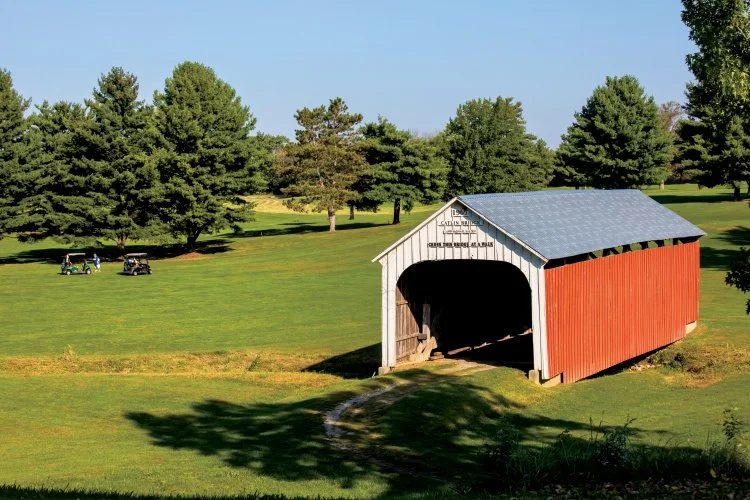
    Catlin Covered Bridge (#13)

    • Built: 1907 by Clark McDaniel
    • Moved: 1961 by Garrard Brothers Trucking
    • Creek: Originally Sunderland Creek; now spans a stream at Rockville Golf Course
    • Location: Originally north side of Catlin on Rockville–Rosedale Road; relocated 2 miles north of Rockville near US 41 and the County Fairgrounds (Blue Route)
    • Size: 54 ft long + two 9 ft overhangs; 16 ft wide; 13 ft clearance
    • Truss Type: Burr Arch, single span
    • Foundation: Poured concrete (both sites)

    History

    • Catlin was settled in 1820 by William Rea; the town was named for Hiram Catlin of the Vandalia Railroad.
    • Local industry included a flour mill (later the Perrin Hotel, destroyed by fire in 1902), poultry businesses, coal mining (closed 1919 due to flooding), and stockyards.
    • The bridge was condemned soon after the Covered Bridge Festivals began, but saved from destruction by relocation to the Rockville Golf Course.

    Today

    • The Catlin Bridge is preserved as a public display, spanning a small stream on the golf course and serving as part of the county’s covered bridge heritage.

  • Big Rocky Fork Covered Bridge (Murphy Bridge)(#6)

    Big Rocky Fork Covered Bridge (Murphy Bridge)(#6)

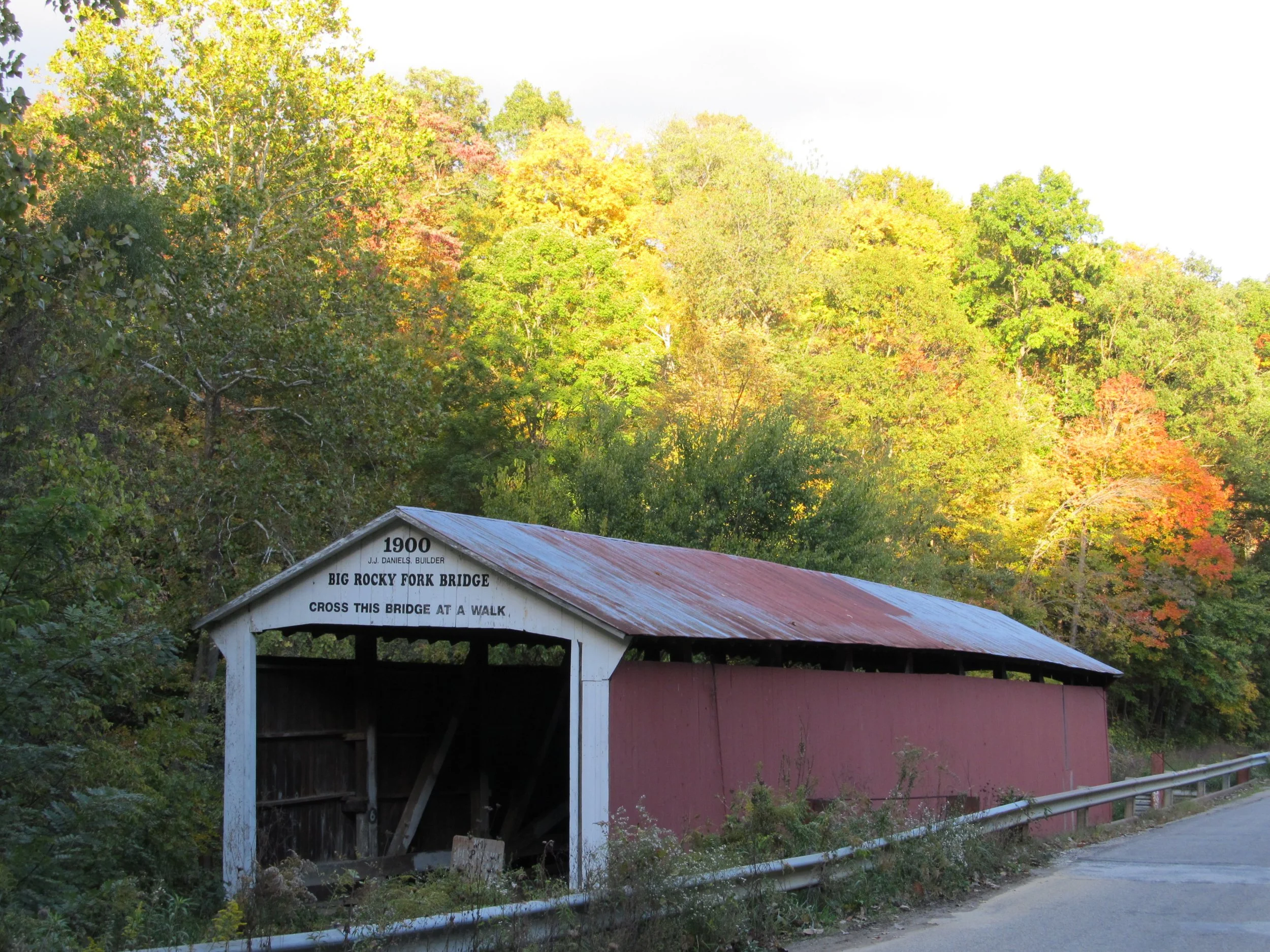
    Big Rocky Fork (Murphy) Covered Bridge

    • Built: 1900 by Joseph J. Daniels
    • Creek: Big Rocky Fork (formerly Rocky Fork)
    • Location: 1 mile SE of Mansfield on Greencastle Road, near Fallen Rock Park
    • Size: 72 ft long + 8 ft overhangs; 16 ft wide; 13 ft clearance
    • Truss Type: Burr Arch, single span
    • Foundation: Hewn limestone block
    • Cost: $1,475.50

    History & Maintenance

    • Completed September 7, 1900; also called Murphy Bridge.
    • Bypassed in 1987; now under Parke County Park Department with limited upkeep.
    • Community cleanup began in 1991 through the Adopt-A-Bridge program.

    Fallen Rock Park

    • Named for a massive sandstone boulder that fell into the creek, creating a local landmark.

    The Cliffside Grave

    • Nearby lies a mysterious 9 ft carved grave in a 100-ft cliff, complete with a stone “pillow.”
    • Legends suggest Native American origins, 19th-century campers, or Israel Asbury—a farmer who dug the grave but died before it was used.
  • State Sanatorium Covered Bridge (#1)

    State Sanatorium Covered Bridge (#1)

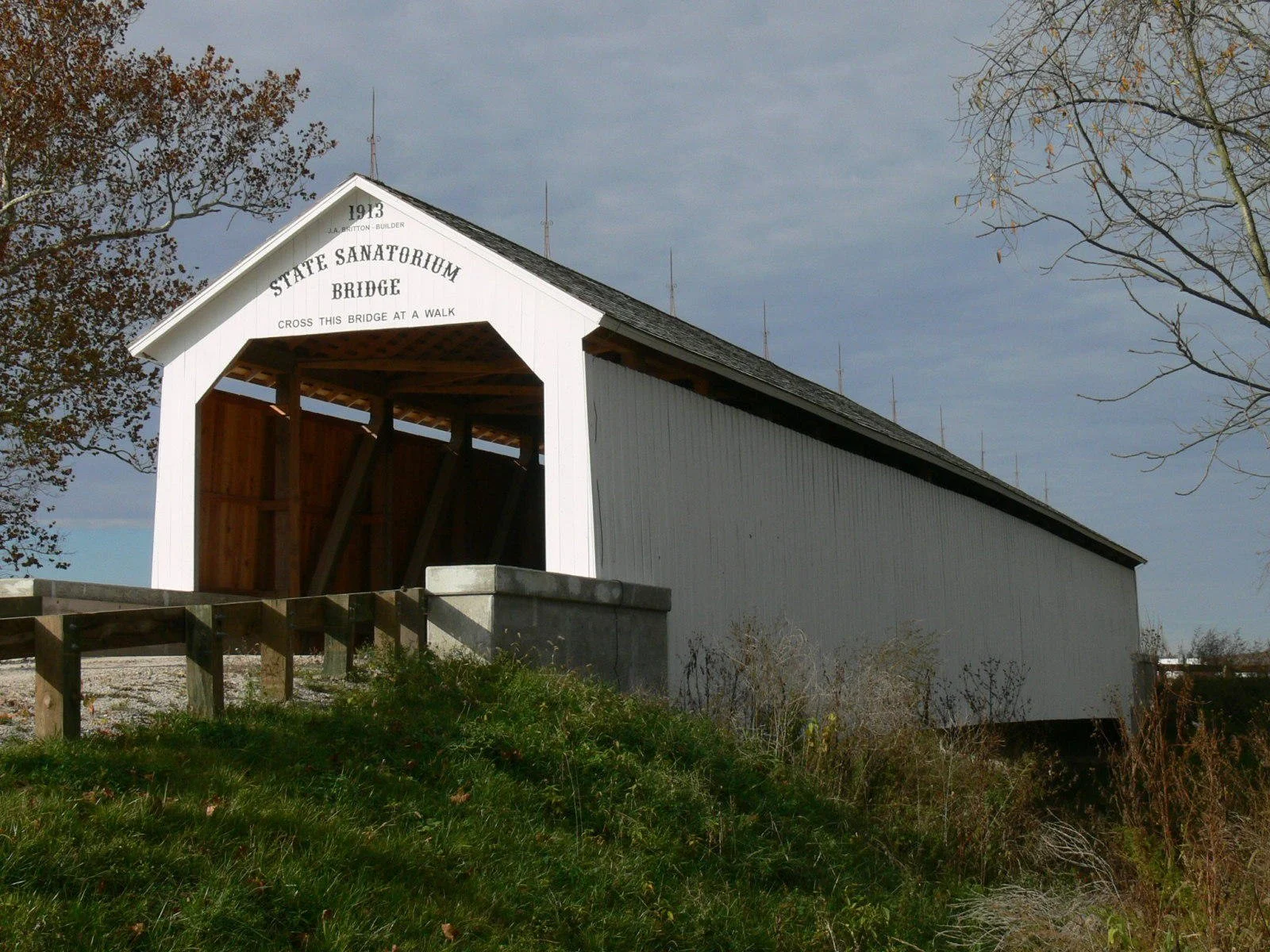
    State Sanatorium Covered Bridge

    • Built: 1913 by Joseph A. Britton
    • Creek: Little Raccoon Creek
    • Location: Originally on State Sanatorium grounds (now Lee Allen Bryant Nursing Home); moved in 2009 to CR 100 N, now open to traffic
    • Size: 154 ft long + two 8 ft overhangs; 16 ft wide; 12’6 clearance
    • Truss Type: Burr Arch, single span
    • Foundation: Concrete (built by Elbridge Boyde)

    History

    • Constructed for the Indiana State Tuberculosis Sanatorium, established in 1907 and operating by 1910 as a self-sufficient community with medical staff, power plant, and farms.
    • The bridge was built to haul coal directly from nearby mines to the sanatorium’s power plant, avoiding longer detours.
    • Elbridge Boyde hauled materials with his mule team, which was the first to cross the bridge.
    • The Plank Road Bridge, previously used for access, washed out in the 1913 flood and was replaced by the Howard Bridge.

    Unique Features

    • Only Parke County covered bridge equipped with lightning rods.
  • Hello world!

    Welcome to WordPress. This is your first post. Edit or delete it, then start writing!