Category: Bridges

Discover the charm, history, and engineering behind Parke County’s iconic covered bridges. This category showcases stories, photos, and insights about our 31 historic structures—each a testament to craftsmanship and community heritage. Whether you’re a local explorer or a curious traveler, dive into the world of bridges that connect more than just roads—they connect generations.

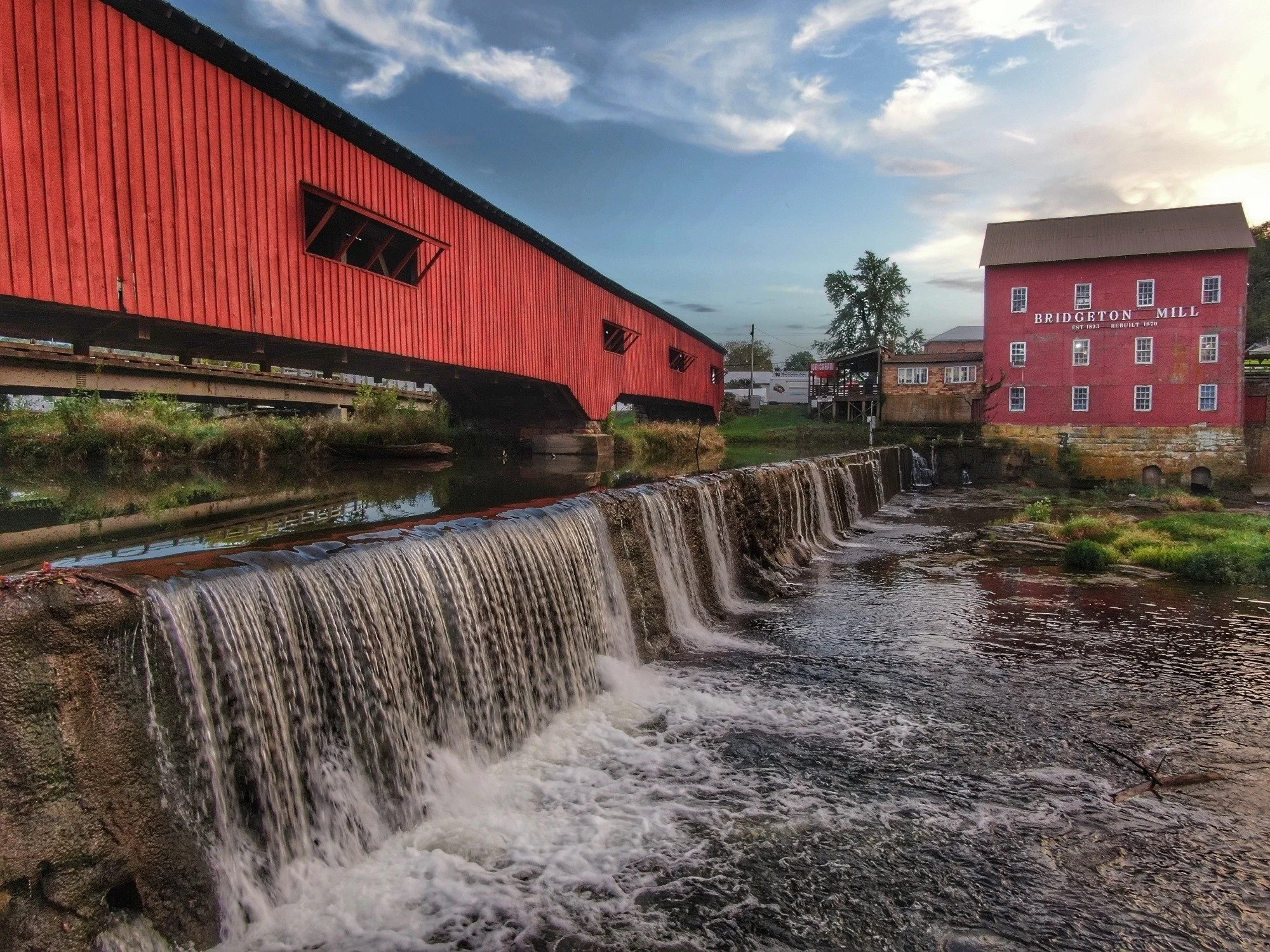
  • Bridgeton Covered Bridge (#8)

    Bridgeton Covered Bridge (#8)

    Bridgeton Covered Bridge

    • Built: 2006 by Dan Collom & local community
    • Creek: Big Raccoon Creek
    • Location: Bridgeton, Indiana
    • Size: 245 ft long + two 11 ft overhangs; 13 ft wide; 12 ft clearance
    • Truss Type: Burr Arch, 2-span
    • Foundation: Sandstone block
    • Original Cost: $10,200

    History & Restoration

    • Early open bridges collapsed; a covered bridge was built in 1868 by J.J. Daniels.
    • Bypassed in 1967, refurbished in 1988–89, but destroyed by arson in 2005.
    • Rebuilt in 2006 through community effort.

    Mill & Town Legacy

    • The Bridgeton Mill, first built in 1823, was rebuilt in 1871 after fire and still operates today, producing over 20 types of milled goods.
    • Bridgeton, once nicknamed “Sodom” for its rough reputation, was renamed by local women after its bridge.
    • The mill dam (225 ft long, 9 ft high) was completed in 1916 and remains a striking feature.

    Notable Details

    • Narrower than most covered bridges at just 13 ft wide.
    • Original Daniels-style portals have been squared off; benches and steps now decorate the entrances.
    • The site remains scenic but hazardous for canoers due to strong currents near the dam.
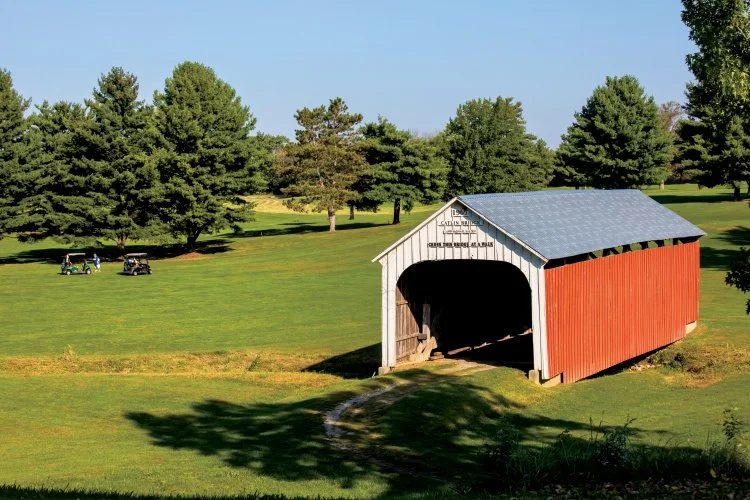
  • Catlin Covered Bridge (#13)

    Catlin Covered Bridge (#13)

    Catlin Covered Bridge (#13)

    • Built: 1907 by Clark McDaniel
    • Moved: 1961 by Garrard Brothers Trucking
    • Creek: Originally Sunderland Creek; now spans a stream at Rockville Golf Course
    • Location: Originally north side of Catlin on Rockville–Rosedale Road; relocated 2 miles north of Rockville near US 41 and the County Fairgrounds (Blue Route)
    • Size: 54 ft long + two 9 ft overhangs; 16 ft wide; 13 ft clearance
    • Truss Type: Burr Arch, single span
    • Foundation: Poured concrete (both sites)

    History

    • Catlin was settled in 1820 by William Rea; the town was named for Hiram Catlin of the Vandalia Railroad.
    • Local industry included a flour mill (later the Perrin Hotel, destroyed by fire in 1902), poultry businesses, coal mining (closed 1919 due to flooding), and stockyards.
    • The bridge was condemned soon after the Covered Bridge Festivals began, but saved from destruction by relocation to the Rockville Golf Course.

    Today

    • The Catlin Bridge is preserved as a public display, spanning a small stream on the golf course and serving as part of the county’s covered bridge heritage.

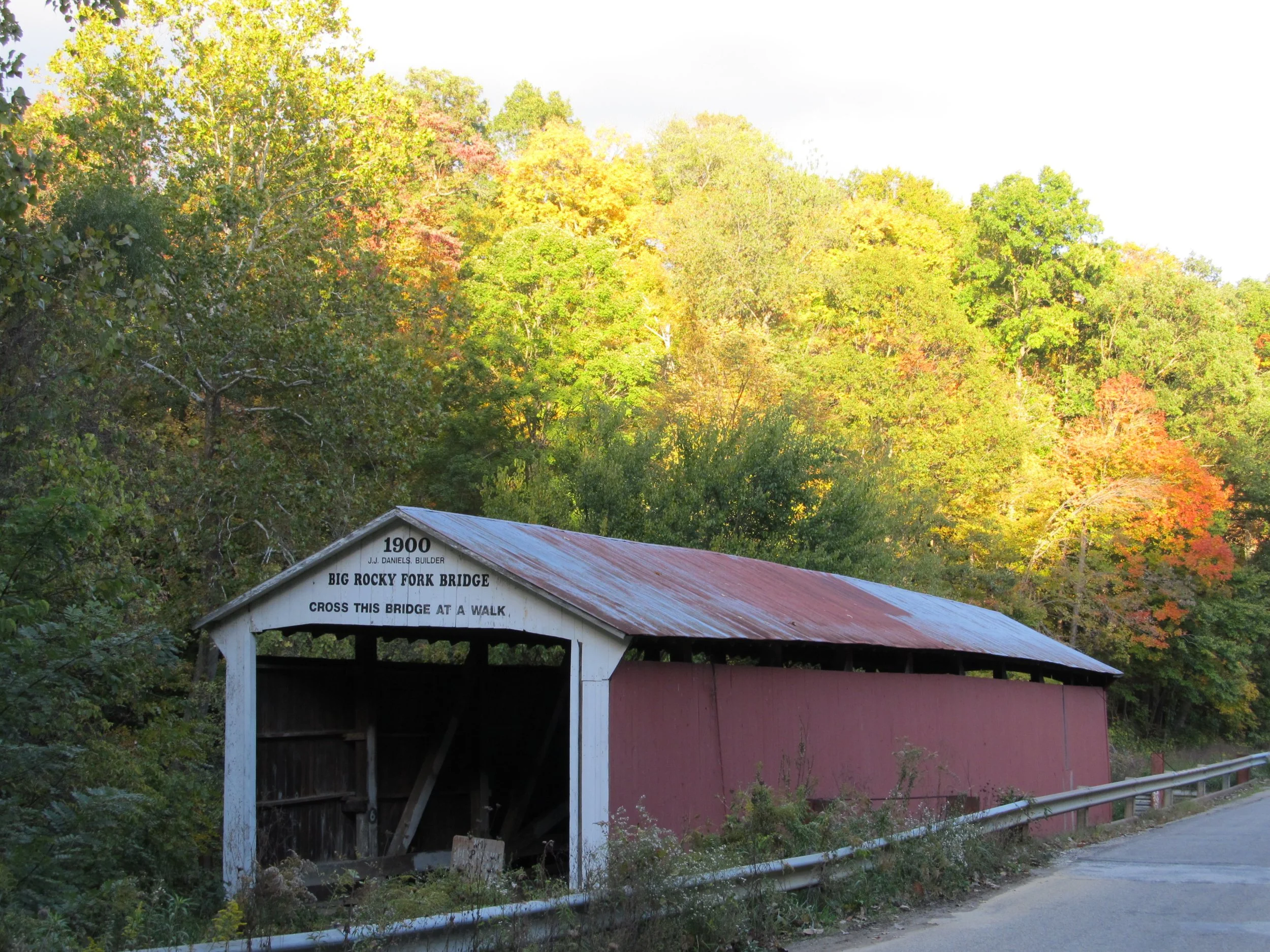
  • Big Rocky Fork Covered Bridge (Murphy Bridge)(#6)

    Big Rocky Fork Covered Bridge (Murphy Bridge)(#6)

    Big Rocky Fork (Murphy) Covered Bridge

    • Built: 1900 by Joseph J. Daniels
    • Creek: Big Rocky Fork (formerly Rocky Fork)
    • Location: 1 mile SE of Mansfield on Greencastle Road, near Fallen Rock Park
    • Size: 72 ft long + 8 ft overhangs; 16 ft wide; 13 ft clearance
    • Truss Type: Burr Arch, single span
    • Foundation: Hewn limestone block
    • Cost: $1,475.50

    History & Maintenance

    • Completed September 7, 1900; also called Murphy Bridge.
    • Bypassed in 1987; now under Parke County Park Department with limited upkeep.
    • Community cleanup began in 1991 through the Adopt-A-Bridge program.

    Fallen Rock Park

    • Named for a massive sandstone boulder that fell into the creek, creating a local landmark.

    The Cliffside Grave

    • Nearby lies a mysterious 9 ft carved grave in a 100-ft cliff, complete with a stone “pillow.”
    • Legends suggest Native American origins, 19th-century campers, or Israel Asbury—a farmer who dug the grave but died before it was used.
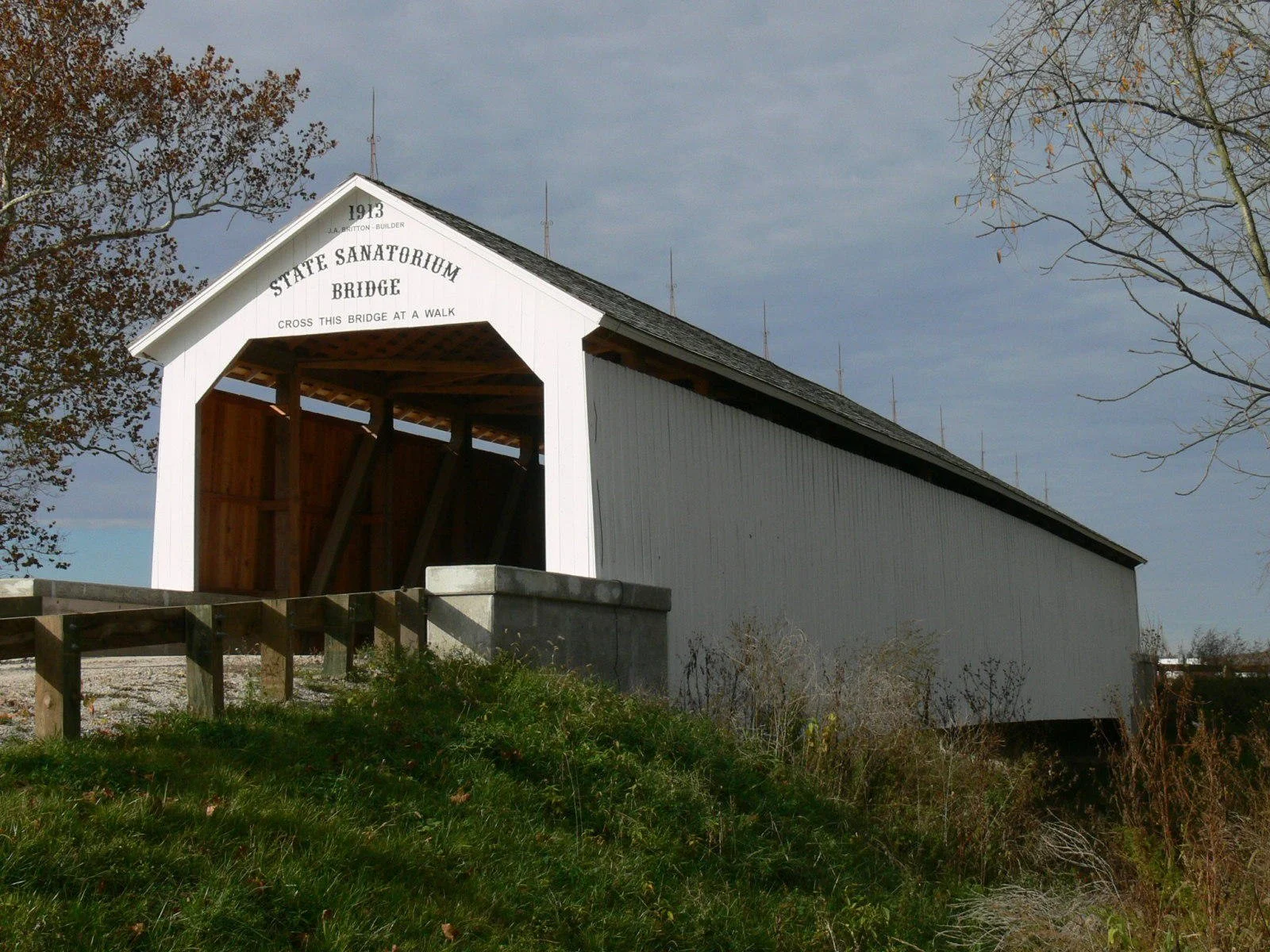
  • State Sanatorium Covered Bridge (#1)

    State Sanatorium Covered Bridge (#1)

    State Sanatorium Covered Bridge

    • Built: 1913 by Joseph A. Britton
    • Creek: Little Raccoon Creek
    • Location: Originally on State Sanatorium grounds (now Lee Allen Bryant Nursing Home); moved in 2009 to CR 100 N, now open to traffic
    • Size: 154 ft long + two 8 ft overhangs; 16 ft wide; 12’6 clearance
    • Truss Type: Burr Arch, single span
    • Foundation: Concrete (built by Elbridge Boyde)

    History

    • Constructed for the Indiana State Tuberculosis Sanatorium, established in 1907 and operating by 1910 as a self-sufficient community with medical staff, power plant, and farms.
    • The bridge was built to haul coal directly from nearby mines to the sanatorium’s power plant, avoiding longer detours.
    • Elbridge Boyde hauled materials with his mule team, which was the first to cross the bridge.
    • The Plank Road Bridge, previously used for access, washed out in the 1913 flood and was replaced by the Howard Bridge.

    Unique Features

    • Only Parke County covered bridge equipped with lightning rods.